
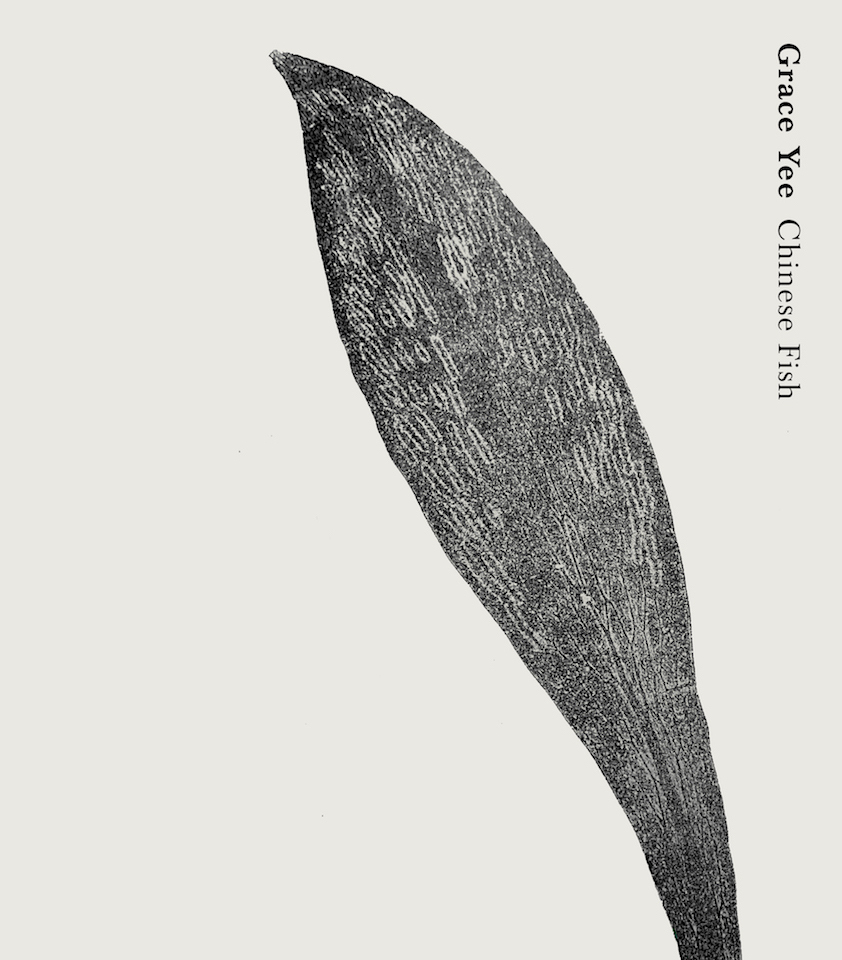
Review of ‘Chinese Fish’ by Grace Yee
Yee, Grace. Chinese Fish. Western Sydney: Giramondo Publishing, 2023.
RRP: $26.95, 144pp, ISBN: 9781922725448.
Miriam Wei Wei Lo
Voices We Need to Listen To
I first encountered Grace Yee’s poetry in 2021 when Alvin Pang and I were editing the ‘Asia’ issue for Rabbit. ‘Playful Bodily Harm’ was compelling: documentary poetry that showed, in skilful archival montage, what racism against the Chinese in late-nineteenth-century Australia was like. Chinese Fish, Yee’s multi-award-winning debut collection, takes what she does in ‘Playful Bodily Harm’ and extends it.
Other reviewers have already commented on how effective Yee is at documenting racism in the New Zealand context1. In this review, I would like to draw attention to the equally powerful work Yee does in representing the lives of twentieth-century Chinese diaspora women.
In ‘Happy Valley’ (which is both a first chapter and an extended series of poem and prose fragments in different voices), we plunge straight into the embodied reality of Chinese women’s lives, with a birth:
The doors burst open and the Grandmother and the Aunty rush into the room. They run straight for the baby already wrapped in a flannelette sheet. The nurse hands the baby to the Grandmother and says, It’s a girl. The Aunty sighs and the Grandmother says, Never mind. The mother—still on her back, feet numb, legs white, nether regions exposed—cranes her head to see. (4)
This birth is then discussed from multiple perspectives. The third person narrative voice is interrupted by a first person narrative voice:
soon as you born
人人 and Aunty May
push the door come
in see my everything
so embarrass! (5)
This first person narrative voice belongs to Ping, wife of Stan, and mother of Cherry. It has its own poetic form: free verse with short lines, left-justified. This is an important voice that re-appears throughout the book. The ‘you’ it addresses is Cherry.
The next voice is a different third person narrative, right-justified with more variation in line length:
The mother-in-law
takes the placenta
and buries it in a feng-shui-ed
location in accord with the lunar
calendar. The hole must be dug deep (5)
This voice appears objective, but the observant reader will soon notice how often this voice slips into anti-Chinese prejudice. This right-justified poetry represents the Orientalising gaze of the British colonial and/or white male settler, which Yee constructs (with some fictional extensions) from twentieth-century archival material2. This voice also recurs throughout the text.
The next voice is a cameo appearance of what I will call the Grandmother/Aunty, giving instructions for a recipe:
the pig feet soup 豬腳薑醋
[…]
wash the ginger and then dry them then waiting
next day peel and cut the pieces half inch size (6)
This is a voice I recognise instantly and instinctively: the Cantonese ‘Aunteeee’ I know from childhood. The diction and timing are pitch-perfect.
There are not many detailed representations of the lives of Chinese diaspora women in the public sphere (Bagnall and Martínez 2; Lo 131). This is because Chinese women in the early twentieth century were a doubly marginalised minority: marginalised from within by misogynistic Confucian patriarchal norms, marginalised from without by racist British colonial attitudes. Their voices are hard to find on the record because they were not invited to speak. Voicelessness, as Spivak argues, is a defining feature of the marginalised or subaltern state. Yet, I would argue that speaking the unspeakable, or finding the voice of the voiceless, is one of the most important things a female intellectual can attempt.
Yee’s approach to this paradoxical task is to weave a complex braid from multiple perspectives. She does the hard work of finding relevant archival material. She mines her own lived experience and family history. She uses a dizzying array of literary techniques: the imaginative capacity of fiction, the incisiveness of poetry, post-modern montage techniques, and the direct-speech of theatre. This is breathtaking sophistication that still manages to keep its feet on the ground and remain accessible.
If the subaltern woman could speak, I think it would be with a voice like Ping’s: in fragments of poetry, a voice fighting to be heard. These fragments register the trauma of Ping’s difficult life: fractured by migration to New Zealand, by her husband’s infidelity, by working long hours in a fish-and-chip shop, by having to raise children in a vastly different culture. Yet, by bringing these fragments together, Yee performs the kind of reintegration that art makes possible.
If the subaltern woman had a daughter, I think she could have a voice like Cherry’s, vulnerable, honest, and feisty:
by the time we got to school our eyes were wide as walnuts. stay out of the sun, our mother would warn, too-dark-like-a-maori. but I knew I had to be brown—it was the colour of everyone-and-everything-in-the-world-that-wasn’t-white. (85)
Some of the things I appreciate most about Chinese Fish are captured from Cherry’s point-of-view, with her insider’s perspective on some of the issues in her community:
A bowl sails, shatters on the hearth.
Footsteps bruising in the hall.
they all dive for the cushions—shaft of light and their mother-
dark marches in wooden coathanger in hand whacks bottoms legs
arms heads 殺你!殺你!殺你!until they all fall down cowering (79)
This is no idealised Other (as Rey Chow would say). This is real people with real complexity: capacity to do good, capacity to inflict pain, capacity to extend grace. This is Cherry’s adulterous father who is genuinely kind when Cherry is sick. This is Cherry’s contradictory mother who wants her to be pretty enough to attract a suitable Chinese husband, but not so pretty that she gets into trouble with pākehā boys. This is Cherry sneaking off with the pākehā anyway. This is fierce baby Joseph defending his siblings with a meat cleaver. This is the humanising capacity of art.
At this time, when China as a nation-state becomes more belligerent in the South China Sea, and suspicions may grow (again) about the ethnic Chinese in Australia, we need work like Yee’s to remind us of our shared humanity. I think Chinese Fish would make a great screenplay or TV mini-series. Come on, New Zealand and Australia! If we could do it for Craig Silvey and Jasper Jones; or for Peter Jackson, J. R. R. Tolkien, and Lord of the Rings, we can do it for Grace Yee and Chinese Fish. We need to hear these voices.
1 See, for example, Chan’s review in Grattan Street Press, Gabrielle’s in Rochford Street Review, and Walton’s in Artshub.
2 The legislative references come from Nigel Murphy’s Guide to Laws and Policies Relating to the Chinese in New Zealand 1871–1997 and the newspaper reportage comes from a wide range of local New Zealand sources such as the Auckland Star. All references are supplied by Yee on pp. 127–129.
Works Cited
Bagnall, Kate, and Julia T. Martínez (eds.). Locating Chinese Women: historical mobility between China and Australia. 1st ed., Hong Kong University Press, 2021.
Chan, Joi Yan Johanna. ‘Book Review: Chinese Fish by Grace Yee’. Review of Chinese Fish, by Grace Yee. Grattan Street Press, Oct 17, 2023, grattanstreetpress.com/2023/10/17/book-review-chinese-fish-by-grace-yee/.
Gabrielle, Leone. ‘The Pains of Many Difficult Situations’. Review of Chinese Fish, by Grace Yee. Rochford Street Review, April 12, 2024, https://rochfordstreetreview.com/2024/04/12/the-pains-of-many-difficult-situations-leone-gabrielle-reviews-chinese-fish-by-grace-yee/
Lo, Miriam Wei Wei. ‘Translating Inheritance: finding contexts for my grandmother’s autograph album’. Westerly 68.2 (2023): 122–136.
Spivak, Gayatri Chakravorty. ‘Can the Subaltern Speak?’ in Peter J. Cain and Mark Harrison (eds.), Imperialism. 1st ed., vol. III. Abingdon, Oxfordshire: Routledge, 2001. 171–219.
Walton, Elizabeth. ‘Book Review: Chinese Fish, Grace Yee’. Review of Chinese Fish, by Grace Yee. Artshub, Sept 4, 2023, www.artshub.com.au/news/reviews/book-review-chinese-fish-grace-yee-2662183/
Yee, Grace. ‘Playful Bodily Harm’ in Miriam Wei Wei Lo and Alvin Pang (eds.), Rabbit: A Journal for Nonfiction Poetry 33 (2021): 30–31.
Miriam Wei Wei Lo writes for the joy of it. She lives in Walyalup/Fremantle. Her latest collection is Who Comes Calling? (WA Poets Publishing, 2023).
Partners