
Giving a Little Push: how emerging poets conceive and cultivate voice in their work
Kayla Brown
This essay is one of the research outputs of GCRL2000, a unit of study which enables Bachelor of Philosophy (Hons) students at UWA to practice research essentials along with discipline content through an attachment to a researcher or research group at the University. In this case, Kayla Browne worked with Daniel Juckes (Westerly Associate Editor) on a research project investigating voice in poetry.
Elsewhere
And so i am never present.
Reading poem after poem—
how closely connected each speaker seems to be
to the earth they walk on,
the sky above them,
the plants surrounding them…
how present they are in a moment—
i could never do that.
It reminds me of walking in the park with my grandmother.
She has such a profound appreciation for everything around her that she stops just
about every two steps to exclaim over something.
‘Look at this flower, it’s like a spiderweb, so beautiful!’
‘This one turns brown in the winter but it looks just as beautiful in a different way!’
‘Look how they all bunch together like that!’
‘Look at the shape of those leaves!’
And i try.
i look
and i smile
and i nod
but my mind is
I use the phrase ‘I got lost in thought’ to describe moments when my mental world takes over such a large part of my consciousness that my mind drops whatever other task it is doing and gets lost in the world of me. Sometimes I’ll come to some revelation through this process: some new way of explaining or thinking through an idea. This is usually when I write. Because I need to be able to express what I have just realised, thought or felt. Except, once a poem is written, I tend not to feel as if I’ve been able to express much at all. How does a poet cultivate their voice so that their thoughts and feelings come through to their readers?
As an emerging poet, I have a particular interest in this question. I am a second-year student at the University of Western Australia, studying a Bachelor of Philosophy, majoring in English and Literary Studies and Classics and Ancient History. As part of my degree, I’ve been completing a research placement over the summer alongside my mentor, Westerly Associate Editor Daniel Juckes, to investigate how emerging poets conceive and cultivate voice in their work. Through this process, I have read and analysed poetry by West Australian poets published in Westerly since 2011. I have also had the opportunity to interview a few of these poets, namely Chris Arnold, Anica Mancinone and Riley Faulds. Their input has helped me to develop my own work and to shape this discussion.
When asked how he would define a poem, Peter Porter Prize-shortlisted poet Chris Arnold suggested that what was most important was the sound patterning of language. Anica Mancinone extends on this, stating that ‘a poem is anything that experiments with language outside of the normal bounds of prose’; that it’s about what the writing evokes and how it uses language innovatively. She says, ‘As long as it’s using language in an evocative way—that’s when I find I connect with the definition of poetry’.
This idea of the evocative resonates with the intuition and sensation established poets tend to describe when asked to identify what a poem is. For example, Robert Frost writes, ‘A poem is […] a big big emotion […] It finds [its] thought and the thought finds the words’ (Untermeyer and Frost 22). A. E. Housman remarks, ‘I could no more define poetry than a terrier can define a rat, but I thought we both recognised the object by the symptoms which it provokes’ (47). When trying to answer the question myself, I fall back on the words of the Romantic poet William Wordsworth: ‘poetry is the spontaneous overflow of powerful feelings’ (16). Even with the writing of a poem, I tend to agree with Wordsworth: for me, a poem comes without a plan. Many poems I see in my mind moments before I write them; others just happen—create themselves as they are written. Anica Mancinone expresses a similar sentiment, saying, ‘A lot of it is about being hit with inspiration, being in the right place at the right time and it coming to you rather than it being forced’.
It seems then, that poetry is the result of a need for expression, but I’d argue that all writing is. Yet, poets often seem to feel as though what they write couldn’t be expressed in any other genre. ‘It wouldn’t sound right’, Chris Arnold says. For me, there are things I have written both as a poem and in another genre, but others that feel as though they wouldn’t be adequately expressed any other way. One example of this came in my poem, ‘showered’:
showered
palms push
against cold tiles
fingers scrape
across bathroom floor
water drips
down curve of spine
collects—
dribbles over—
gone
flesh against flesh against floor
heaving shaking trembling
won’t stop—
so tears so words
everything is white
towel
tiles
bath
mat
sink
walls
door
white—
what would they look like daubed in red?
tears won’t do words won’t do
selfish to try anyway
So hide behind the Bathroom Door So hide behind the Symbols
I couldn’t have expressed this moment without the poetic techniques I deployed: line-breaks and spacing to allow the words to dribble over and splash; manipulation of capitalisation to hide the poem behind its last line; elimination of pronouns, determinants and full-stops to reflect the hesitance to say anything concrete or connect myself to the image portrayed. Yet even with all this at my disposal, I find that a final product never feels like it is quite there. Perhaps this is because I have not yet learnt to trust what I’m doing, a step which Arnold kept coming back to as key to the successful production of poetry. But in my experience, a poem is the expression of some inexpressible and personal truth.
Just as many poets struggle to define poetry, many writers struggle to define voice. In his reflection on the Editor’s Desk, Ben Mason articulates that, when it comes to voice, the whole is not reduceable to its parts. How then do you talk about voice and its emergence? Voice, I think, is the expression of self, and in that sense a mode of giving—giving your readers a share of your feelings and experiences. But what is that mode of giving? Mancinone describes it as ‘a little push’. ‘If there’s a theme in the poem’, she says, ‘but there’s a little push within it that’s trying to indicate a—not an opinion, but like a feeling on that theme or a perspective on that theme, that’s where the voice of the author comes through’.
While voice is not reducible into parts, perhaps those parts are a place to start. How does, say, imagery and metaphor contribute to the emergence of voice in a poem? Imagery happens in the brain and affects the body because the brain regions used for imagining a sensation are the same as those used in physically sensing it. Hence, imagery can immerse a reader into the experiences of the poem on a sensory level (Shewell np). Metaphor often links sensation, imagination and rational thought (Shewell np), which seems to me a good way of achieving Frost’s definition of a poem. The emotion finds its thought and this hybrid feeling-thought then finds the words of a metaphor, allowing both components to be expressed as one. I find that my own poetry often starts with a metaphor or symbol which stems from a feeling-thought and forms the heart of the work. Take the example of my poem ‘Sitting on the banks of a river’:
Sitting on the banks of a river
I watch a boat full of people row
past
me
to
the face
of a
waterfall.
Just on the other side—
a world—
my
world.
The people in the boat,
they want to go through—
to explore this new world.
I want them to go too.
If I could just give their boat a
little push
then they could reach
into the world
of
me.
But they’re in the middle of the river.
I’m on the bank.
This poem stemmed from Mancinone’s metaphor of voice as a ‘little push’; grew from the feeling-thought of sitting on the banks of my poems, unable to reach my readers stranded in the middle of them in order to give them that push into the world of me. If a metaphor or symbol is at the heart of a poem, the poet’s voice must surely be embedded somewhere within it.
But content, such as imagery and metaphor, is only a small part of what constitutes a poem. Just as much, if not more, comes from the form it takes: the way it sounds and what it looks like. In describing his poetry, Jason D. DeHart says, ‘Form, in this case, matches life’ (2906). I think that is a good way of describing how I approach form when reading a poem, as well as how form shapes itself in my own poetry. The placing of the words and lines and rhythm play an indisputable role in the framing of voice. Even something as specific as the punctuation choices a poet makes are always significant, because they contribute to how a poem looks and sounds as well as guide the way in which it is read.
‘Putting a word on a page quite separately really emphasises it’, says Riley Faulds, the third of the emerging poets I interviewed for this essay. This can be seen in very specific ways in his poem ‘Significant Tree Register’, published in Westerly 65.1 (72–74). The repeated line ‘significance’, which finishes both the first two parts, starts much further across the page, set apart to emphasise that is what it’s all about. On the importance of another line—the indented ‘I doubt the track was sealed’ in the third part of the poem—Faulds says, ‘Separating that line, I hope, would intensify it’ because while it may seem like a simple observation, the sediment would have been a big deal in the time and place of the poem. ‘Something like an indent’, Faulds observes, ‘can influence how a person reads the poem but also can have meaning in itself’. This meaning, perhaps, is the ‘little push’ of what is important to the writer.
I experimented with this idea of emphasis via separation and indentation in my poem ‘waking up’:
waking up
why is the first thing
i know every morning
that my lemon tree stands
right outside my window
full of lemons
—the
tantalising
trickle
of juice
an acid river
carving paths
down my cheeks
pulls eyes
open to bright yellow
darkness…
my lemon tree stands right outside my window.
but You are gone.
In the fifteenth line, for example, I attempted to create an overwhelming sense of ‘darkness’ by isolating the word from the image of the bright morning and the lemon-yellow tree.
This kind of mechanism functions across the body of a poem too: Chris Arnold says, ‘When you’re writing, you have choices to either contain a line of thinking inside a stanza or run it across and you can do different things depending on the situation’. Playing around with this while editing ‘waking up’, I found that running a single strand of thought through the first five stanzas could replicate the continuity of waking up. The stanza breaks allowed me to guide the emphasis of the poem too. For instance, ending the first stanza with the lemon tree standing allows this image to linger.
Having a short one- or two-line final stanza is another tool of emphasis—one that Faulds makes use of in ‘Significant Tree Register’ as well. ‘A lot of the best poems’, he says in explanation, ‘[…] are the ones that leave you with either a bit of an epiphany or a buzz or a bit of a bang’. I was hoping to achieve a similar thing in ‘waking up’. Again, I think this is an example of the poet exerting their voice—pushing a little bit more of what matters through the images presented.
Despite the careful explanations I’ve just attempted to give regarding my own writing, my poetry remains very instinctual. The form of a poem seems to take shape as it is written, as though moulded by the words themselves rather than by a series of conscious decisions. As Faulds says when discussing his own poetry, ‘I’m having to […] try to think of things that were intuitive and find reasons why, because there always is a reason why even if it’s a bit subconscious’. Studying literature, I’ve been trained to ask, ‘What does the writer do and why do they do it?’ I wonder if they even know the answer to that themselves, or if the point is that it’s up to the reader to respond to the writer’s gut feelings? My guess is that it differs between poets and poems depending on the role the reader plays. DeHart addresses his reader as ‘imaginary reader / who has become real upon this page’ (2908). It seems his reader is part of the voice he has created for himself. In contrast though, Mancinone feels her focus on her reader and their opinions is a hindrance: ‘At the end of the day’, she says, ‘I think poetry writing is something very personal and as long as it serves a purpose to you then you’ve written something good’. Arnold and Faulds say their poetry is aimed heavily at people they are close with but written primarily for themselves. ‘I write because I like the sound of the thing’, Arnold says. Similarly, Faulds affirms, ‘I’m writing […] what I know is evocative for me’. Yet he also believes ‘what’s important is in the reading—in how it’s read—that the voice comes through’. So if a poet writes primarily for themself, how do they have a voice? How do they shape a poem so that a reader experiences them?
When asked these questions, Mancinone responded, ‘I try to capture a really specific moment in realism rather than writing broadly. […] I like to root my poetry in really specific memories—I think that might be how my voice comes through’. For her, poetry does stem from a gut feeling: ‘I like writing about things in the moment more so than making sense of it necessarily’, she says, ‘because I think that’s a lot of how life feels most of the time’. So, in this sense, voice emerges through a writer’s genuineness. ‘I think the main thing’, Mancinone explains, ‘is a sense of honesty or candidness’.
This is important to me in my writing as well. Yet sometimes I feel as though I am unintentionally, if also intentionally at the same time, hiding in my poetry, behind the symbols I use. This is something I only realised when I approached the end of ‘showered’, as my focus shifted from the obstinate resistance of the tiled floor to the opaque shield of the bathroom door. The poem, and those I wrote after it, became a fight to sit within symbols rather than hide behind them, because I want to be open and honest in my writing. But it’s a very complex and frustrating truth, the idea that good writing is about telling ‘the truth’—at least as complex as the notion of ‘voice’ that emerged from and inspired my research.
This frustration is something that Peter Knight discusses in his poem ‘This is not’, published in Westerly 66.1 (128-129). The feeling of not being able to say what was intended, not being able to produce something that is authentically you—a part of yourself put to the page for others to experience—was so familiar. I feel it every time I finish a poem.
This is not either
After Peter Knight’s ‘This is not’
This is not a poem.
it is a collection of words
i’ve tried to wrest
from the deepest depths
of my mind and soul
but only managed to draw
from the shallow pools
that lap at their edges
This is not a poem.
it is the smoky swirls
of an ashamed witch’s
failed portal it may
astound in the sense
that it works as a screen
and allows a view of a
hidden realm
but no one gets through
to truly know it is not
as was
intended
This is not a poem.
it is a river
flowing
from my outstretched
hand to yours
settling over the
blanket of your skin
from which it will
evaporate
This is not a poem.
i’ve never written a poem.
Acknowledgements
Thank you to Chris, Anica and Riley for giving up their time to talk to me. Thanks to Kate for letting me sit in on a Westerly meeting and to Lissa for her role in getting this ready for the website. A huge thank you to Daniel for guiding me through every step of this process, for helping me push my poetry and for reading this essay over and over again, including when it was in its early stages and was 6,500 words long. I have gained so much from working with him and am extremely fortunate to have had the experience.
Works Cited
DeHart, Jason D. ‘Poetic Voice in Research: a social sciences exploration in verse’, The Qualitative Report 26.9 (2021): 2901–2910. https://doi.org/10.46743/2160-3715/2021.4674.Faulds, Riley. ‘Significant Tree Register’, Westerly 65.1 (2020): 72–74.
Housman, A. E. The Name and Nature of Poetry. Cambridge: Cambridge University Press, 1933.
Knight, Peter. ‘This is not’, Westerly 66.1 (2021): 128-129.
Mason, Ben. ‘Finding My Voice’. The Editor’s Desk, Westerly Magazine(2021). Sourced at: https://westerlywoo.fordenicol.com/finding-my-voice/.
Shewell, Christina. ‘Poetry, Voice, Brain, and Body’, Voice and Speech Review 14.2 (2020): 143–166. https://doi.org/10.1080/23268263.2020.1743502.
Untermeyer, Louis, and Robert Frost. The Letters of Robert Frost to Louis Untermeyer. London: Jonathan Cape, 1964.
Wordsworth, William. ‘Preface to “Lyrical Ballads”’ in G.S. Dickson (ed), Wordsworth’s Prefaces. London: Thomas Nelson and Sons, 1937, 11–45.
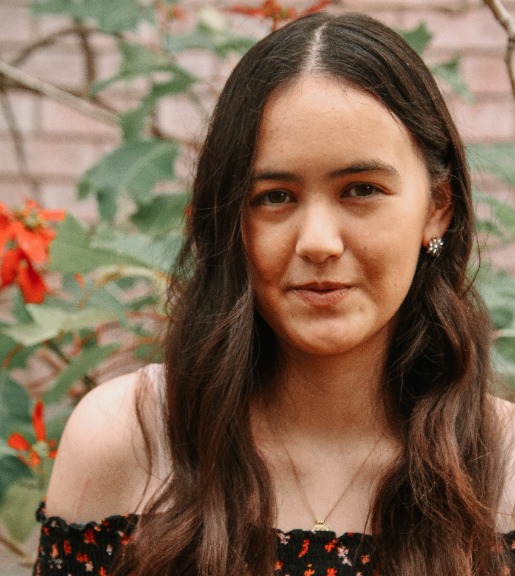
Kayla May Browne is a nineteen-year-old poet and novelist living in Perth, Western Australia, where she has been her whole life. She lives with her father and brother and attends the University of Western Australia, majoring in English and Literary Studies. She graduated from Duncraig Senior High School in 2020. She wrote her first novel, Like a Cigarette, in 2016, when she was in grade eight, and followed it up with two other novels to make the Kara Van Whiete trilogy, which she published on Amazon in 2021.
Partners